

What You Can Do!
There is no single solution to the problems of the environment, especially regarding solid waste management. But there are approaches that can help us solve them. Difficult as it may be, if individual efforts are put together, their impact on the environment can be felt.
Some people believe that misfortune or disaster must first happen in order to bring about changes in the way people relate to the environment. This is known as the crisis approach. It manifests itself only in times of disaster, only then will people begin to change their life-style. For instance, when the supply of water is scarce do we minimize our consumption, but when there is abundant supply do we not wastefully use it?
Another approach is the top-down approach which involves the law-giving bodies creating and implementing laws that will regulate the behavior of the people. The law against smoke belching, smoking, littering, the Clean Air Act and the Solid Waste Management Act are examples of this approach.
A profound change in attitude and values of each individual will influence a change in life-style. This approach is known as the own-up approach. The idea of restraint will focus our attention to our responsibility to the earth and to the future generation as well.
Exercising restraint and control in buying products, for instance, we should consider if the product is harmful to the environment.
Zero Waste: Is It Possible?
A community free of waste, abundant with natural resources, very idyllic, isn’t it? Achievable? Not in the near future perhaps and definitely without the cooperation of the whole community.The zero waste program arouse from R.A. 9003. This program includes strategies like composting, recycling, resource conservation, re-use and segregation.
Composting refers to the process of controlled decomposition by micro-organisms, like bacteria and fungi, converting organic materials into humus-like products. These products are the used as organic fertilizer.
Recycling involves the process of transforming used solid waste materials as raw materials, upon proper treatment, for a new useful product. (newspapers, tin cans, tetra packs and other materials).
Resource conservation is the process of reducing the amount of solid waste generated, and reduction of consumption and utilization of recovered materials.
Re-using is the process of recovering materials intended for the same or different purpose.
Segregation at source refers to the practice of separating different materials found in solid waste in order to promote the practice of recycling and re-using as well as to reduce the volume of waste upon collection or disposal.
Zero waste management is an approach that promotes ecological consumption, reduce number of waste, ensure that products are made to re-use, recycle and back to its marketplace. It helps conserving nature and protecting community health.
Zero waste is a practiced around the world. In fact, zero waste is pursued in different countries. In the Philippines, there is so called Ecological Solid Waste Coalition of the Philippines Inc., or the EcoWaste Coalition, it is a network of public interest groups and movement formed in 2000 to promote zero waste by 2020 by advancing the ecological management of discards, clean production and other strategies aimed at conserving and protecting the earth’s finite resources and building a toxic-free society.
Communities in the Philippines Implementing Zero Waste Programs
Barangay Holy Spirit in Quezon City with a population of about 120 000, generates 66 tons of waste daily. In 1995, the baranagy relaunched program on waste separation. Three years later, in 1998, the barangay became self-reliant in waste disposal. Dump trucks have to cut their trips from 23.5 to 7.5 daily due to increase in recycling. Today, Barangay Holy Spirit has achieved waste reduction rate of about 60%.
What is Recycling?
Recycling
Recycling is the process of collecting certain materials that would otherwise by consider as waste (i.e. paper, plastic, tin cans and wood) and turning them into new recycled product.
Benefits of Recycling
- It conserves both raw materials and energy and reduces the amount of waste generated.
- It helps reduce the amount of waste tat is disposed of landfills.
- It conserves our natural resources because it reduces the need for raw materials.
What You Can Do!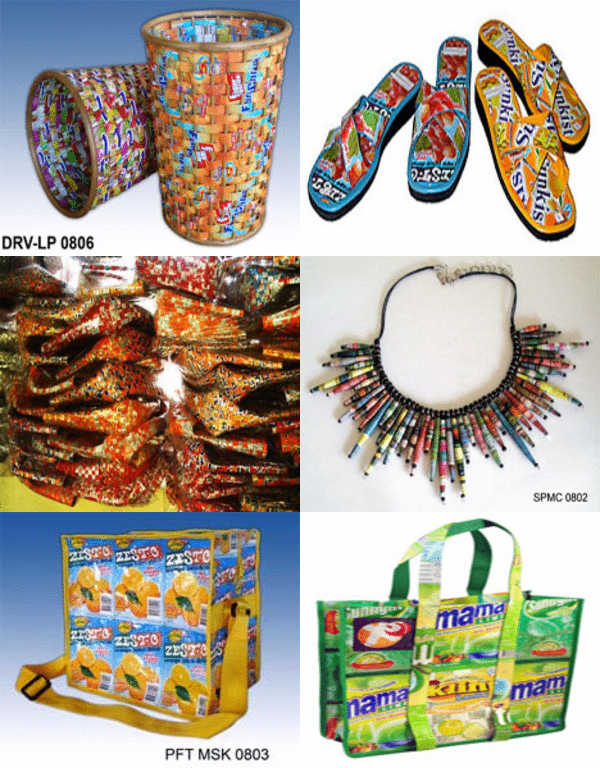
The Recycling Process
1. Collecting of Recyclable Materials
Recyclable materials refer to any waste material retrieved that can be converted into a new useful product. Examples are newspaper, corrugated cardboard, plastic bottles, and tin cans.
2. Processing the Recyclable Materials
The collected recyclable materials are sorted into group, cleaned and sold to manufacturers who will convert the materials into new products.
3. Manufacturing
Today, many products are made out of either total or partial post consumer (recycled) products. Plastic bottles and aluminum cans are not only made of recycled materials but they can also be recycled again.
4. Purchasing of Recycled Products
We,
as consumers, should buy recycled products.
Salvage is
another form of recycling, in which valuable substances of used products are
reclaimed without reusing the rest of the product (i.e. lead found in batteries
and gold parts in computer chips).
What does reuse mean?
Reuse means using an objects or material again and again, for the same or different purpose. It involves taking unwanted products such as furniture, books and electronic products and giving them to those who need them.
Some are designed to be reused again such as rechargeable batteries.
Benefits of Reusing
- It extends to life of materials saving the earth’s natural resources.
- It prevents objects and materials from becoming waste.
- It saves energy which helps to reduce the risk of climate change
- It reduces the amount of waste sent to landfills
- It saves money.
What You Can Do!
- donate your unwanted items to charity (i.e. furniture, clothes, toys)
- swapping or selling your unwanted items (i.e. furniture, electronic items)
- buying second-hand items
Repair is often another function of reuse wherein durable goods are made fully functional again through minimal repair.
What does reduce mean?
Reduce means minimizing the amount of waste generated or decreasing the overall resource consumption and utilization of recovered resources.
Benefits of Reducing
- it reduces the amount of waste sent to landfills and subjected to incineration
What You Can Do!
- carrying a cloth bag from home instead of plastic carry bags reduces the use of plastic bags
- utilizes rechargeable batteries
What is Segregation?
Segregation is the practice of separating waste in solid waste in order to promote recycling, reusing and reducing of waste.
Benefits of Segregating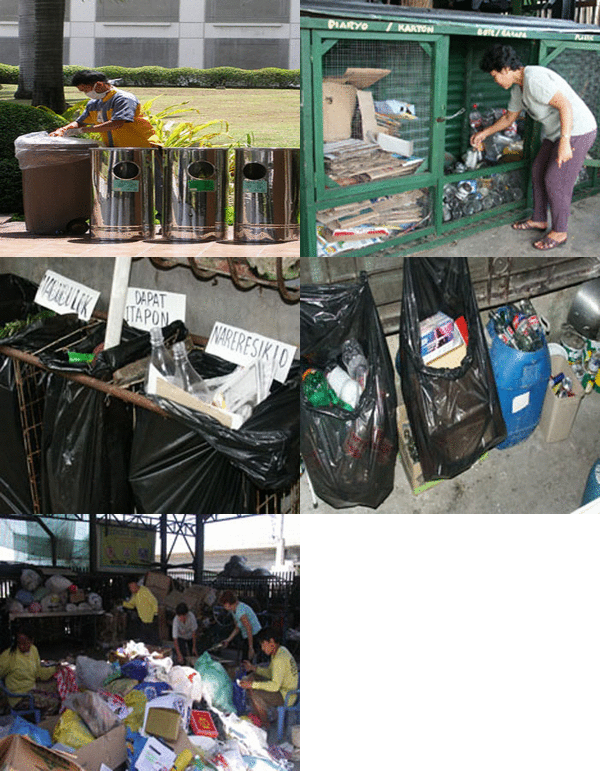
- it is easy to dispose of waste
- is saves time, energy and money
What You Can Do
Waste can be segregated as:
1. Biodegradable – organic wastes such as kitchen waste left over vegetables, unconsumed food, fruits, flowers, leaves.
2. Non-biodegradable – inorganic wastes such as plastic, paper, aluminum foil, can, pieces of glass.
Segregating waste can be profitable. After segregating plastic, paper or metal, these materials can e sold and recycled afterwards.
What is Composting?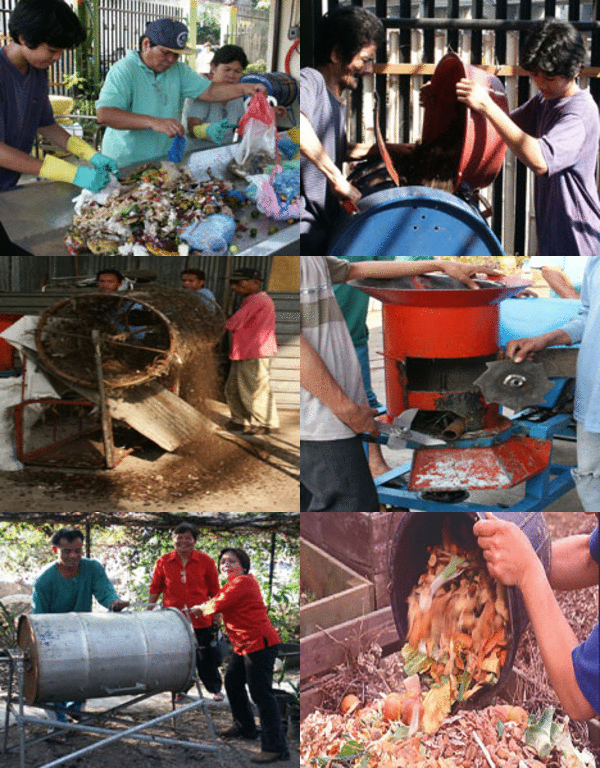
Composting is the process of natural decomposition of organic material by microorganisms, bacteria and fungi, forming a humus-like product called compost.
Benefits of Composting
- It is beneficial for growing plants as it retains soil moisture, improves soil structure and provides nutrients.
It saves money by reducing the use of fertilizers.
